About
Business, then science, then both at once.
I have had three careers and they keep turning out to be the same one. I started in industrial and organizational psychology and went to work as a corporate recruiter. When the 2010 BP oil crisis reshaped the hiring market, I went back to school for biology and biochemistry, and spent the next stretch of my life at the bench in cell and gene therapy. Then I crossed back to the business side: grant management, research finance, an Executive MBA. Today I lead AI integration and data enablement for a cell-and-gene-therapy institute, which is really just the first two careers finally being useful at the same time.
At the bench
I started in Curt Freed's lab during the embryonic stem cell era of Parkinson's cell therapy. I used microRNA to differentiate embryonic stem cells into dopamine neurons, transplanted them into rat brains, ran apomorphine rotation analysis to see whether the graft actually worked, then dissected the brains and did the histology myself. That thread also pulled me into my first bioinformatics work. It is still the bench project I am proudest of.
What came next was a mouse model of harlequin ichthyosis. A postdoc left the project unfinished, and I picked it up, finished the work, redid the paper, and got it published. I am co-first author on it. That is the moment the lab learned what I could carry on my own.
Then I was handed a harder question: could I do what Robert Sackstein was doing? His group conferred homing on mesenchymal stem cells by modifying their surface glycans enzymatically. We got there another way, with modified RNA instead of glycomodification, because modified RNA was Ganna Bilousova and Igor Kogut's technology and the thing the lab was genuinely best at. Modified nucleotides, optimized poly-A tails, ARCA and methylation caps, and a great deal of molecular cloning. First the cells were engineered to home to inflamed tissue, then to change what they signal once they arrive. That work brought large grants into the lab.
That is the same point as the one above, in miniature: the fastest route to a hard result was the one that used what the people around me had already built.
The MSC program I ran with Dennis Roop, Ganna Bilousova, and Igor Kogut, at their behest, in the labs that became the Gates Institute, alongside iPSC-based work. I trained PhD students without holding a PhD myself, and pushed the lab toward exosomes, lipid nanoparticles, and the senescence-associated secretory phenotype years before any of the three were fashionable.
I am a co-author on five peer-reviewed papers.
Building the institute
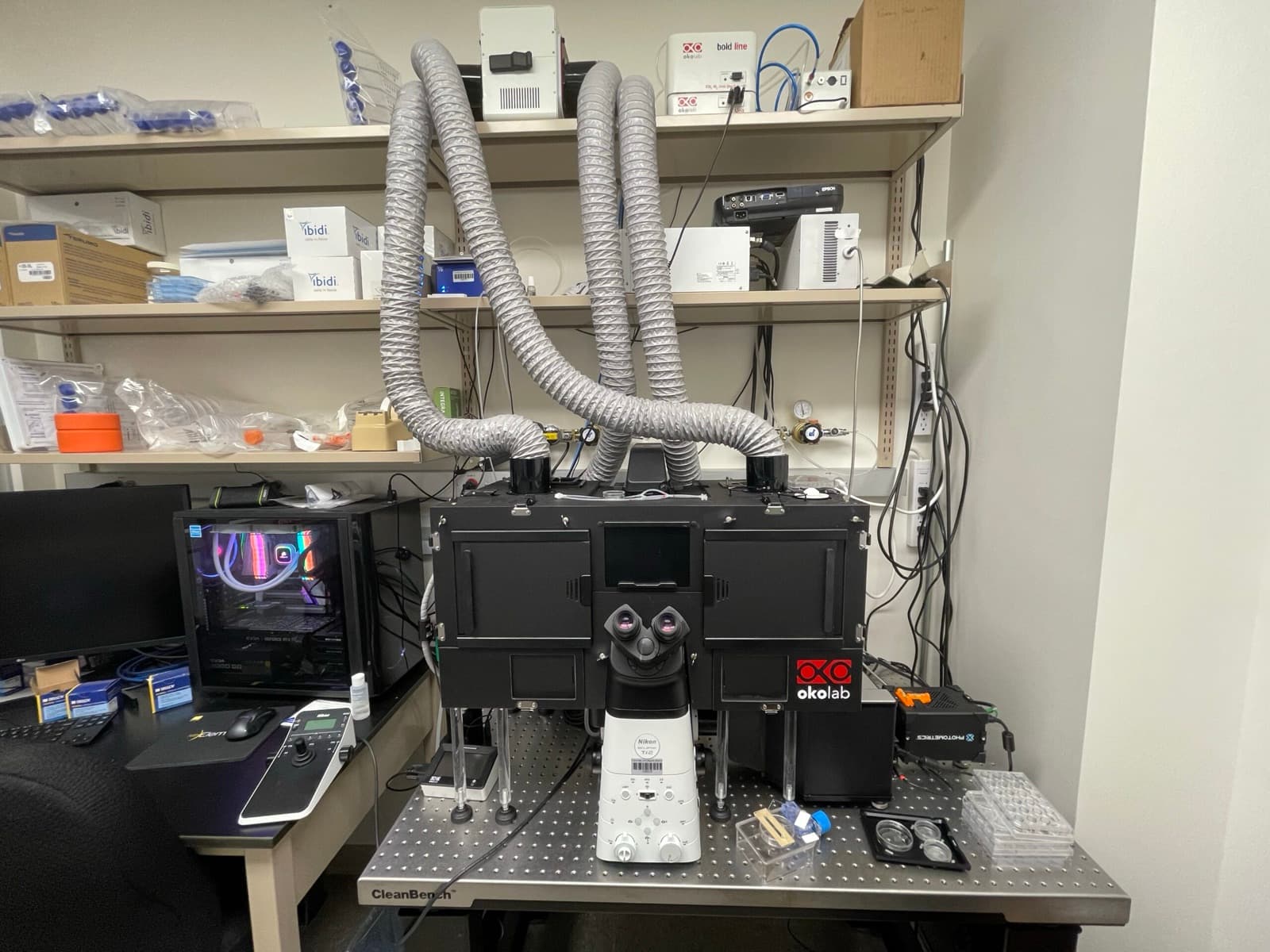
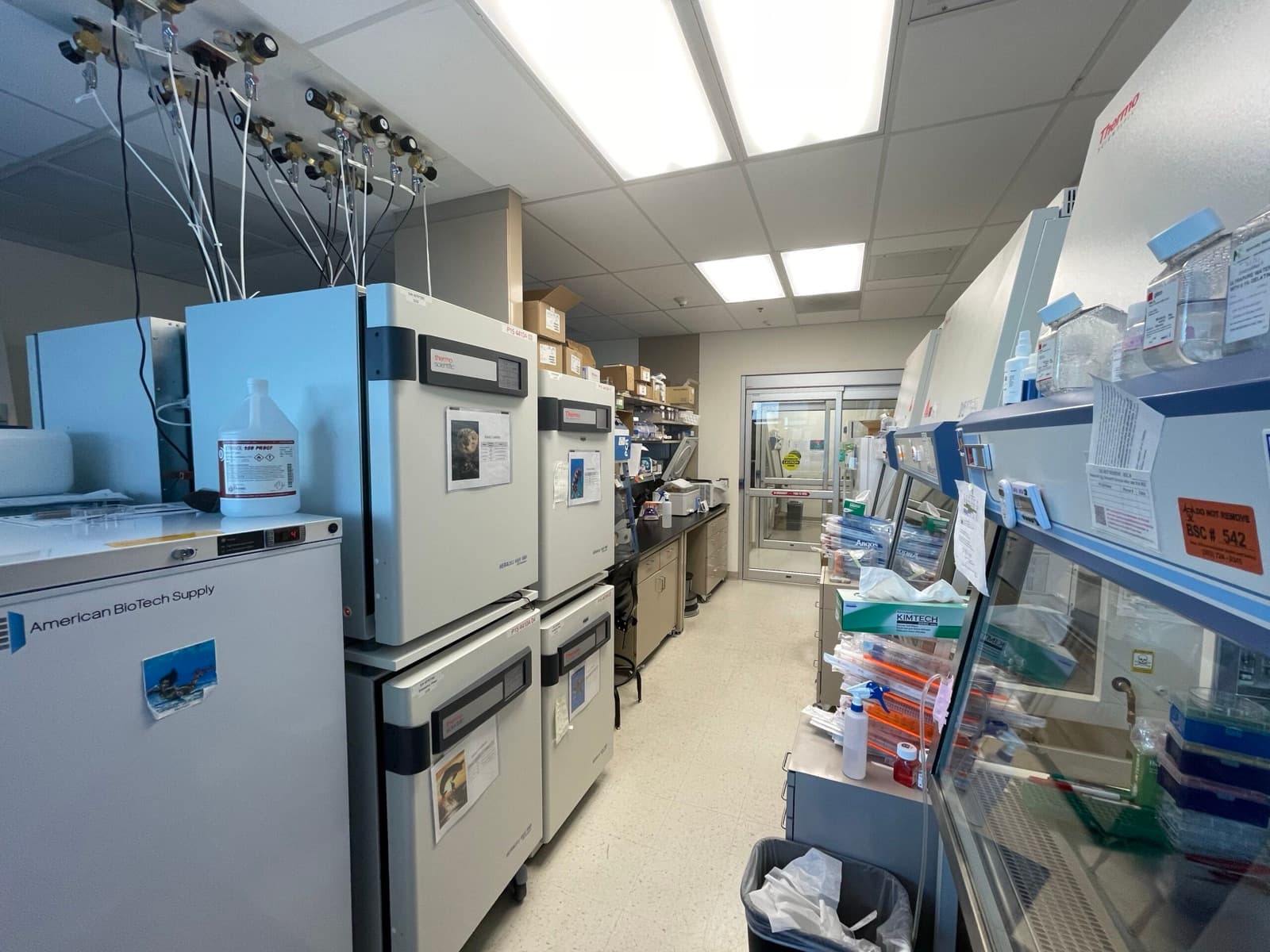
When the Gates Institute was standing itself up, I worked on equipment purchasing and facilities. The decision I still point to is the direction of the mirroring: the cGMP facility was built to mirror the research labs. Research picked its equipment for scientific reasons, and GMP matched it so that moving a process from bench to clinic would not mean relearning everything. Vendor partnerships with STEMCELL Technologies and Miltenyi were chosen with the clinic in mind from the first conversation.
Ten years of growth later, that institute looks more like a startup than a department, and I grew with it.
Where I am now
I am Assistant Director for Business and School of Medicine Research Operations, responsible for a $10M research portfolio, and I am the institute's AI integration and data-enablement lead. I build the connective tissue: data hubs, evidence tools, and AI workflows for an organization that grew faster than its systems did. The strategy is pilots inside of pilots. Win one stakeholder, hand them working proof, use it to bring in the next.
I teach as much as I build. I co-founded the AI MBA Club and its bi-weekly seminar at CU Boulder Leeds, and I run workshops for Executive MBA students, faculty, and advisory board members. I serve as the CU Anschutz representative to the VA, as a voting member of the VA Institutional Biosafety Committee, and on the IRB Subcommittee on Research Safety. Outside the institute I run 7Versions, an AI consulting practice, and I built topcut.ai, which is proof I still ship things on my own time.
What I am good at
Translating between rooms that do not speak the same language. I can sit with a scientist and argue about a differentiation protocol, then sit with a CFO and argue about the same project's burn rate, and both conversations are honest because I have actually done both jobs.
Building systems that survive contact with real users. I ship kaizen-style, a bite at a time, because a small tool people actually use beats a large one they route around.
Knowing where AI helps and where it does not. I run multimodal safety evaluations as a habit, not a stunt: put the same problem in front of several models and study where they disagree. Most business problems are not language problems, and knowing the difference is most of the job.
Teaching it afterward. The work is not finished when the system runs. It is finished when the people around me can build the next one without me.
Outside the work
Years in open and decentralized science, including work with Gitcoin and DAOs, on the argument that personalized medicine should end up a public good rather than one more line between the haves and the have-nots. Current research interests: longevity, skin rejuvenation, and personalized autoimmune-derived CAR-T.
Otherwise: lacrosse, skiing, and family time. I read a lot, listen to too many podcasts, and follow macroeconomics, investing, and entrepreneurship closely enough to have opinions.